
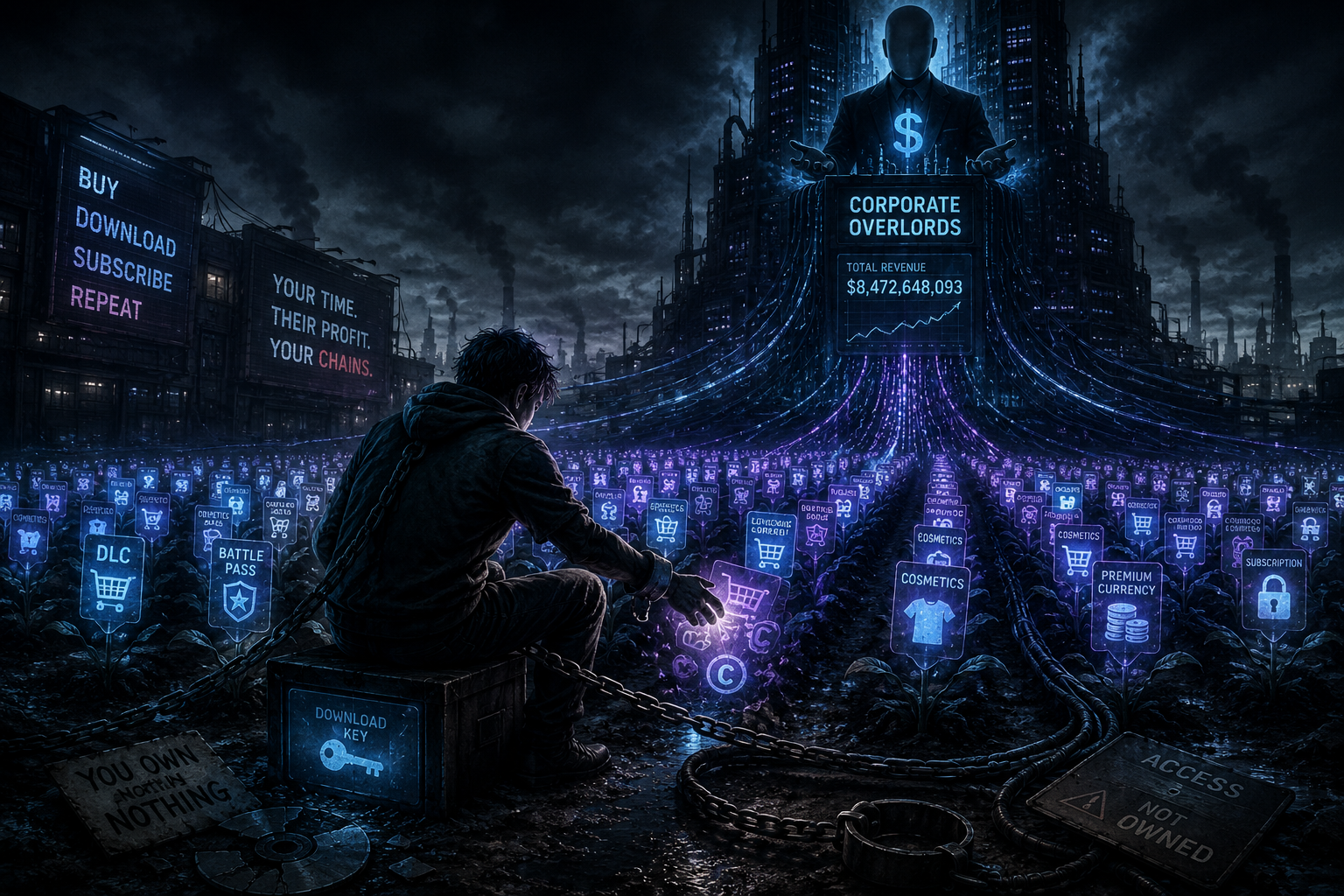
On July 1, 2026, Sony’s PlayStation division announced publicly that they will be ending physical disc production for new games releasing on PlayStation consoles starting in January 2028. PlayStation is going 100% digital for new games, with one exception: they will still print physical boxes with a key inside.
For many gamers, this feels like a bad ending. But the truth is that this did not happen overnight. It has been almost 20 years since one of the major catastrophes happened in gaming with the birth of microtransactions and the slow death of ownership. Sony is not starting something new. They are taking it further.
This is only for games, because Sony Music will still press physical media. That part is interesting because physical media for music and movies has actually seen a small resurgence. In 2025, physical media had hit the bottom after losing over 20% per year, but then it improved.
People are starting to care again about ownership when it comes to music and movies because streaming and licensing are becoming an issue for many people. Granted, we are still talking about a smaller portion of the market, something like 30% physical versus 70% streaming, but there is still a discussion happening there.
The same cannot be said for gaming. On PlayStation, only around 15% of game sales are physical, with about 85% being digital. Across the entire global video game industry, physical sales make up roughly 10% to 15% of all sales.
But are these numbers really the truth, or is this a publisher trick?
First, let’s understand what happened in 2006 when Bethesda Softworks launched what many people believe was Patient Zero for microtransactions: the $2.50 Horse Armor. Despite the criticism at the time, and despite the cost at the time without inflation, publishers understood something important. People were willing to pay real money for digital things.

We need to make a distinction here. I am talking about microtransactions, not full DLC packages. A real expansion or DLC package is one thing. Microtransactions are different. Those are the little things, the small digital purchases, the cosmetics, the unlocks, the currencies, the things that keep adding up.
Many things were born from there. Free-to-play games started showing up where, in order to advance faster or unlock certain things, you had to make purchases. Then came more season passes, battle passes, digital currencies, cosmetics, skins, and all the little things publishers could sell after the game was already sold.
So nowadays you purchase the game, then you have the DLC, then you have the Season Pass, and then you have microtransactions. All of those transactions get grouped into the same digital statistics, and I believe that is intentionally done by the accounting and PR agencies working for publishers. This skews the number in favor of digital.
That is why I ask if the numbers are really telling the whole story. When they say digital is 85%, how much of that is people buying full games digitally, and how much of that is DLC, Season Passes, cosmetics, skins, and microtransactions? Those are not the same thing, but they are all counted together because it makes digital look stronger.
Publishers do this for two reasons.
The first reason is the digital premium. When you buy a physical disc at a retail store, the publisher loses a part of that money to the store, the shipping company, and manufacturing. There is packaging, distribution, and all the people involved in getting that game onto a shelf. When you buy from the digital store, the publisher keeps a massive chunk of that money, or in some cases most of it.
The second reason is killing the used market. You cannot resell, trade, or lend a digital download game. It completely eliminates the multi-billion-dollar used game market from companies like GameStop and sellers on eBay, forcing every single player to buy their own copy.
Gamers are mad, but gamers are also partly to blame. There is another current discussion online about a small game on Steam for $5. People are refunding it because they can complete the game in less than two hours.
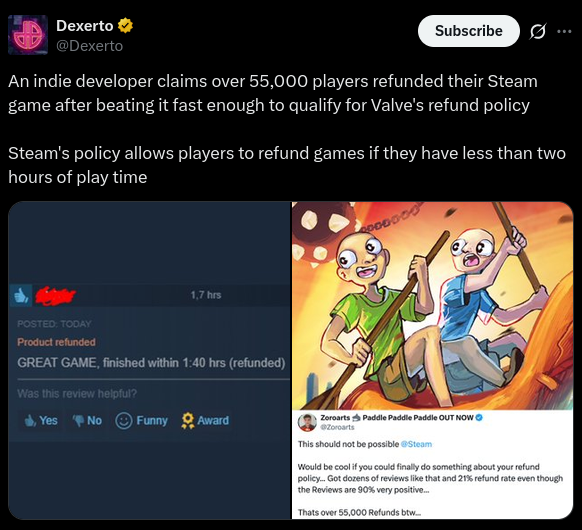
There are a lot of low-quality games out there, but people are willing to pay for them. The gamer has stopped demanding quality and started demanding quantity. They want more, more, more. More games, more content, more updates, more things to unlock, more shiny stuff. But a lot of times they do not even enjoy it. They just want the next thing.
What I am trying to say is that in six months they jump into a new bandwagon, forget all the money and time they invested, and keep moving on, never coming back. Publishers understand this. They understand the gamers of today. They know many players do not really care what they put their money on. They just want something new and shiny. They want to be first to play it, first to post it, first to talk about it.
There is no pride of ownership.
This is going to end up bad for gamers because eventually companies are going to start charging for more and more things. Cloud storage, more access, premium access, more profile accounts, more subscription tiers. Every little thing that used to be part of the experience can become another monthly fee.
On PC, you can buy the same game on different storefronts, install it, go online, and play. But on a console, you buy the game and then still have to pay the console company a monthly fee to get online. A lot of people do not realize this because the company gives them “free” games every month. They feel like they are receiving a lot of benefits, but a lot of times they are receiving a lot of nothing. They feel like they are receiving hours of entertainment, but they cannot really relive or own that experience.
I personally stopped buying physical games around 2010 because the install that came on the disc was useless by the time you installed it. You needed to download a patch. You needed an update. You needed something new before you could even really play. So why go to the store and buy it when you can just download it?
Basically, I was forced into digital.
As much as gamers are to blame, we became digital slaves. There is not much we can do about it unless we are willing to buy older games and play older consoles where nothing was subscription-based or required an internet connection just to play. Those were the days when publishers delivered quality because they wanted your sale. They worked for your money. Their goal was to deliver a quality experience.
Now it feels different. Now, if they want to keep making sales, they need to keep feeding players microtransactions, little things, small purchases, and shiny items to keep them coming back.
Who knows? Maybe some companies will not like the response and we might see some consoles bring physical games back. I do not foresee it happening, but who knows.
One thing is for sure: the gaming industry is changing once more, and it is not good for gamers.